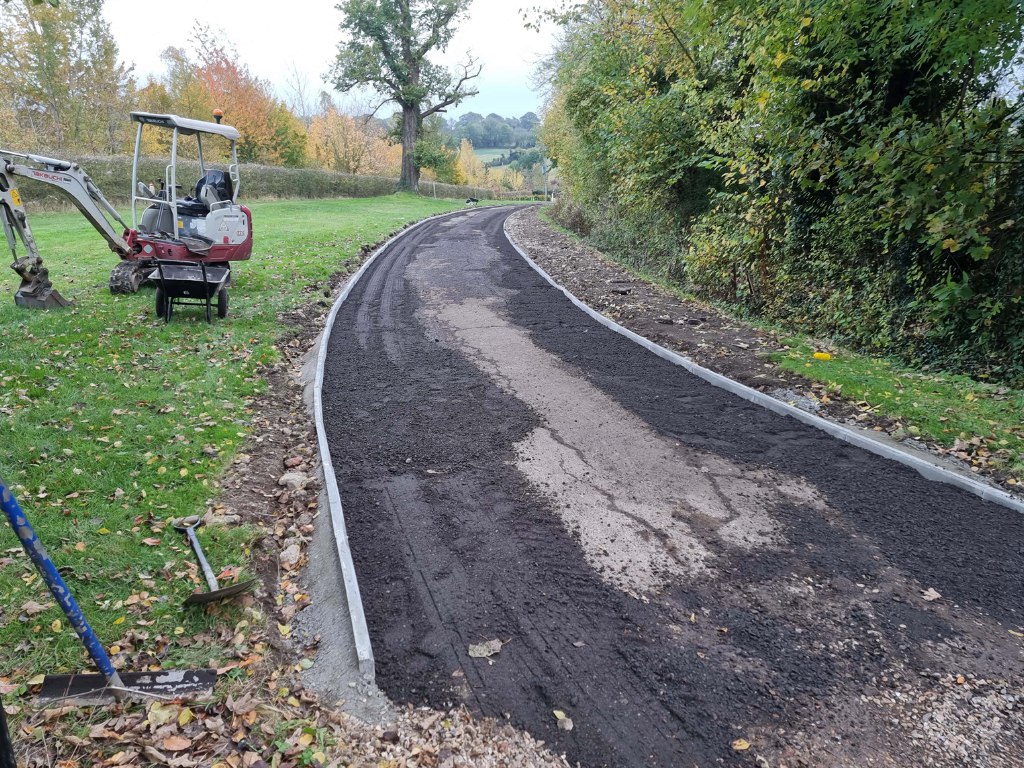
Are Resin Bound Paths a Good Choice for Creating Cleaner Garden Access?
Garden paths have an important practical role. They connect entrances, patios, lawns, side passages and other frequently used areas, helping people move around the property without repeatedly crossing soil, grass or loose ground. When an existing route becomes muddy, uneven or difficult to maintain, improving the path can make the whole garden easier to use.
For properties in Ascot, Berkshire, resin bound paths can provide a clean, continuous and visually consistent surface where the underlying ground is prepared correctly. The finished path can help create clearer access through the garden while reducing many of the problems associated with fragmented, loose or deteriorating surfaces. As with any surfacing project, however, the quality of the groundwork, drainage, levels and edging will strongly influence the result.
Why Can Resin Bound Surfacing Work Well for Garden Paths?
Resin bound surfacing is created by mixing selected aggregate with resin before the material is laid and finished as a continuous surface.
For garden paths, this can create a neat route with fewer visible joints than many modular paving systems. The surface can follow straight or curved layouts and can be designed to connect different parts of the garden in a more coordinated way.
Its practical value comes from more than appearance. A well-planned path can improve everyday movement, create clearer routes and make areas that were previously awkward or muddy easier to use.
A Defined Path Helps Keep Garden Access Organised
Without a clear route, people naturally take the shortest path between different parts of a garden.
This can lead to worn grass, compacted soil and informal tracks developing over time.
A properly positioned resin bound path creates a defined surface for regular movement.
This helps organise the layout of the garden and reduces the need to continually cross softer ground.
Resin Bound Paths Can Create a Cleaner Walking Surface
One of the main reasons property owners improve garden paths is to create a cleaner route during everyday use.
Soil and grass can become wet and muddy during prolonged periods of rain.
A properly constructed resin bound path provides a hard, continuous surface that can make access more practical throughout changing weather conditions.
The quality of drainage and surrounding ground preparation remains important to achieving this result.
Muddy Garden Routes Can Become Difficult to Use
Repeated foot traffic across soft ground can quickly create worn sections.
Once the surface becomes compacted and uneven, water may begin collecting in depressions.
The route can then become increasingly muddy.
Creating a purpose-built path removes regular foot traffic from the vulnerable ground and provides a more suitable surface for everyday access.
Side Access Areas Can Particularly Benefit
Narrow side passages often experience repeated foot traffic.
They may also receive limited sunlight, meaning damp ground can take longer to dry.
Where the existing route consists of soil, worn grass or uneven materials, a resin bound path can create a much clearer and more manageable connection.
The width and drainage of the passage should be considered carefully before installation.
A Continuous Surface Can Feel More Coordinated
Paths made from several different materials can sometimes look fragmented.
Old paving, loose stone and repaired sections may all meet along the same route.
Where the underlying construction can be prepared appropriately, resin bound surfacing can create a more consistent finish.
This can make the route feel like an intentional part of the garden rather than a series of disconnected surfaces.
Fewer Surface Joints Can Simplify the Appearance
Individual paving units naturally create joints.
A resin bound path has a more continuous finish.
This can create a cleaner visual line through the garden, especially where the route is long or curves around planting.
The reduction in obvious joints can also help the path feel less visually busy.
Resin Bound Paths Can Follow Curved Garden Layouts
Not every garden benefits from rigid straight lines.
Paths may need to curve around lawns, trees, planting areas or existing features.
Resin bound surfacing can be shaped to follow these routes.
This flexibility can help the path respond to the actual garden rather than forcing the landscape to fit a fixed paving pattern.
Straight Paths Can Create Clear Connections
In other gardens, a direct route may be more practical.
A straight path between an entrance and patio, for example, can make everyday access simple and efficient.
Resin bound surfacing can provide a consistent finish along these direct routes.
The layout should be based on how people naturally move around the garden.
Path Width Should Reflect Everyday Use
A path should be wide enough for the way it will actually be used.
A narrow route may be sufficient for occasional access, while frequently used areas may need more generous proportions.
The design should also consider whether people are likely to carry garden equipment, bins or other items along the route.
Planning the width correctly can make the finished path considerably more practical.
Cleaner Access Is About More Than Surface Appearance
A path may look attractive when newly installed, but practical access depends on how well it performs over time.
Levels, drainage, edging and the supporting base all influence whether the route remains comfortable to use.
A clean appearance should therefore be supported by correct construction.
The visible resin bound finish is only one part of the overall path.
Ground Preparation Is Fundamental
A resin bound surface should not simply be laid over unsuitable or unstable ground.
The condition beneath needs to be assessed first.
Soft areas, movement, poor levels or unsuitable existing materials can influence the finished path.
Proper preparation creates a more reliable foundation for the resin bound surface.
Resin Bound Surfacing Cannot Correct a Failed Base by Itself
A smooth new surface can temporarily disguise problems below.
However, if the underlying construction continues moving, those issues can affect the new path.
This is why a failed or unstable base should be addressed before surfacing.
The quality of the finished result depends heavily on what supports it.
Existing Paths Need Individual Assessment
Some properties already have an established path that may provide a suitable basis for further work.
Others have surfaces that are too deteriorated, uneven or unstable to be used without additional preparation.
There is no single approach that suits every site.
Professional assessment helps determine what can be retained and what needs improvement.
Uneven Existing Paths Can Affect Everyday Movement
Older paths can develop settlement, raised sections or depressions.
These changes can make the route feel awkward underfoot.
Simply covering the surface without correcting significant irregularities does not necessarily solve the problem.
Preparation should create appropriate levels before the resin bound finish is applied.
Surface Levels Influence Drainage
Water behaviour is closely linked to path levels.
If the route contains low areas, rainfall can collect rather than disperse appropriately.
Correct preparation should consider how water moves across and around the path.
Drainage should be part of the design rather than something considered after surfacing.
Existing Water Problems Should Be Addressed First
If an existing route already experiences persistent standing water, a new surface alone may not remove the underlying cause.
The problem may relate to surrounding levels, ground conditions or other drainage factors.
These should be considered before installation.
A well-planned resin bound path should form part of the solution rather than simply covering the visible symptom.
Resin Bound Surfaces Can Support a Neat Garden Layout
A clearly defined path can help organise adjoining areas.
Lawns, borders and planted sections can sit more neatly beside a continuous route.
This can give the garden a more deliberate structure.
The path becomes part of the overall design rather than simply a way of getting from one point to another.
Edging Helps Define the Path
Good edging provides a clear boundary between the resin bound surface and surrounding ground.
It can help maintain a tidy shape, particularly where the path meets lawns or planting.
The edging design should be considered during preparation.
It should complement the path rather than appearing as an unrelated addition.
Paths Beside Lawns Need Careful Detailing
Where a path runs alongside grass, the relationship between the two surfaces matters.
Poorly defined edges can create awkward maintenance areas.
A clearly finished boundary can make the transition easier to manage.
Planning the path level and edging together can create a more coherent result.
Borders Can Benefit From a Clear Separation
Planting areas often benefit from having a defined edge beside the path.
This helps create a more organised appearance and can make the route easier to follow.
The path should not interfere unnecessarily with established planting.
Its layout should work with the garden rather than simply cutting through it.
Resin Bound Paths Can Connect Different Outdoor Areas
A garden may contain several separate features that do not feel well connected.
A consistent path can link these areas together.
This can make the garden easier to navigate and visually more unified.
The route can be particularly effective when the same surface is used to connect frequently visited areas.
The Path Can Improve Access to a Patio
Where a patio sits some distance from the main property access, the route leading to it can be just as important as the patio itself.
A clean path helps create a logical connection.
This can make outdoor dining or seating areas easier to reach without crossing muddy ground.
The path width and approach should be planned around regular use.
Garden Buildings Can Benefit From Better Access
Sheds, storage areas and other garden buildings are often reached by informal routes.
These can become worn and muddy over time.
A resin bound path can create a defined connection that is easier to use throughout the year.
The surrounding levels should be considered so that the path integrates properly with the building entrance.
Frequently Used Routes Deserve More Attention
Some parts of a garden receive far more traffic than others.
Repeated use can quickly expose weaknesses in grass, soil or loose materials.
These routes are often the strongest candidates for a more durable surface.
Planning the path around genuine movement patterns helps avoid creating a route that people naturally ignore.
A Path Should Follow How People Actually Use the Garden
A beautifully finished path provides little practical value if it is positioned away from the natural route.
Before installation, it is useful to consider where people already walk.
Entrances, gates, patios, storage areas and garden features all influence movement.
A successful path should make everyday access more convenient.
Cleaner Access Can Reduce Wear on Surrounding Grass
When people repeatedly cross a lawn to reach another area, the same line of grass can become thin or damaged.
Providing a clear path encourages movement onto a more suitable surface.
This can help reduce unnecessary wear on surrounding grass.
The benefit comes from good path positioning as much as from the material itself.
Loose Gravel Routes Can Migrate Over Time
Loose stone paths can work well in some gardens, but the aggregate can move into adjoining areas.
Regular foot traffic, maintenance and weather can gradually change the surface.
Resin bound aggregate is held together within the finished system.
This creates a more fixed walking surface where a continuous finish is preferred.
Resin Bound Paths Still Require Routine Care
No outdoor surface should be considered completely maintenance-free.
Leaves, soil and general debris can collect on a garden path over time.
Routine cleaning helps keep the surface looking orderly and prevents organic material from accumulating unnecessarily.
The advantage is that the path provides a clearly defined hard surface that can be maintained as part of normal garden care.
A Clean-Looking Path Still Depends on Its Surroundings
If adjacent borders continually spill soil onto the route or surrounding levels direct water across it, the path can become untidy despite having a good surface.
The design should therefore consider adjoining ground.
A well-finished resin path works best when the surrounding garden is also planned appropriately.
The Finished Surface Should Be Comfortable to Walk On
A practical garden path needs to feel consistent underfoot.
Sudden level changes or poor transitions can make movement less comfortable.
The base and finished surface should therefore be prepared to create a coherent route.
This is particularly important where the path is used every day.
Changes in Level Need Careful Planning
Not every garden is completely flat.
Paths may need to work across changing levels.
These transitions should be considered before surfacing.
A design that responds properly to the ground can create a cleaner and more usable route than trying to force one continuous level where it does not naturally suit the site.
Path Entrances Should Be Easy to Identify
The points where a garden path begins and ends influence how naturally people use it.
Clear connections at gates, doors, patios and other surfaces can make the route more intuitive.
Abrupt or poorly aligned transitions can reduce the benefit of an otherwise well-built path.
The complete journey should be considered during planning.
Resin Bound Paths Can Help Smaller Gardens Feel Less Fragmented
In a compact garden, too many different materials can make the space feel divided.
A simple, continuous path can create visual consistency.
This can help connect different sections without introducing unnecessary surface changes.
The result should remain practical rather than purely decorative.
Larger Gardens Can Use Paths to Define Movement
In a larger outdoor area, clearly defined routes can help organise movement between different sections.
Resin bound paths can create these connections without requiring every area to use the same surface.
The path can act as a visual link.
This helps make a larger garden feel more coherent and easier to navigate.
Aggregate Choice Influences the Finished Appearance
The aggregate used within resin bound surfacing contributes significantly to the final look.
The choice should complement the surrounding garden and property.
However, appearance should not take priority over preparation and construction.
A well-selected aggregate cannot compensate for inadequate groundwork.
Colour Should Support the Overall Garden Design
A path is usually a connecting feature rather than the main focal point.
The chosen finish should therefore work comfortably with adjoining materials and planting.
A restrained, coordinated surface can help the route sit naturally within the garden.
The practical performance of the path should remain the main priority.
Path Shape Can Influence How Spacious the Garden Feels
A route that is unnecessarily wide or awkwardly positioned can consume valuable garden space.
Likewise, a path that is too narrow may feel restrictive.
Good design balances access requirements with the proportions of the garden.
This helps create a route that feels integrated rather than intrusive.
Resin Bound Paths Can Be Useful in Narrow Areas
Side passages and tighter garden routes can be difficult to surface neatly.
A continuous resin bound finish can suit these spaces where preparation and access are appropriate.
The design needs to consider drainage and the relationship with surrounding walls or boundaries.
Good groundwork becomes particularly important where there is limited space to manage levels.
Existing Features Should Be Considered Before Installation
Established garden features may influence the route.
The path may need to work around planting, drainage points or other fixed elements.
These should be identified before the groundwork begins.
Planning around existing conditions can reduce unnecessary disruption.
The Path Should Be Designed With Future Use in Mind
Garden requirements can change.
An area used only occasionally today may become more important later.
When planning a new path, it can be useful to consider likely future movement as well as current use.
A sensible layout can remain practical even if the way the garden is used develops over time.
Resin Bound Paths Can Support a Low-Clutter Design
Because the surface is continuous, a resin bound path can create a relatively simple visual line.
This can suit gardens where a clean and uncluttered layout is preferred.
The design does not need complicated patterns to define the route.
Good proportions and appropriate edging can provide enough structure.
Surface Consistency Can Improve Everyday Practicality
A path containing loose, broken or uneven sections can require constant attention when walking through the garden.
A consistent surface removes many of these interruptions.
This can make everyday access feel simpler.
The benefit is particularly noticeable on routes that are used frequently.
Existing Path Problems Should Guide the New Design
A replacement path should not simply copy an arrangement that has never worked well.
If the existing route is too narrow, poorly positioned or regularly waterlogged, those issues should inform the new design.
Improvement comes from solving practical problems rather than only changing the surface material.
Signs a Garden Path Could Benefit From Improvement
A new resin bound path may be worth considering where the existing route:
- becomes muddy after rainfall;
- contains worn grass or exposed soil;
- is uneven or uncomfortable to walk across;
- includes several different damaged surfaces;
- contains loose material that regularly moves;
- has poorly defined edges;
- does not provide a clear route between important garden areas;
- has low points where water frequently collects;
- makes side access difficult to maintain;
- no longer suits how the garden is used.
These signs do not automatically mean resin bound surfacing is the only suitable solution. They indicate that the path layout and construction may benefit from professional assessment.
Not Every Garden Needs a Resin Bound Path
Resin bound surfacing should be chosen because it suits the site and the required result.
Some areas may function perfectly well with an existing path.
Others may require a different type of construction.
The decision should be based on how the garden is used, the condition of the ground and what improvement is actually required.
Good Installation Matters as Much as Material Choice
The performance of a resin bound path depends heavily on how it is constructed.
Ground preparation, base condition, levels, edges and drainage all influence the finished result.
Focusing only on the resin and aggregate overlooks these essential elements.
A professional installation should consider the complete path from the ground upwards.
Professional Assessment Can Identify Underlying Problems
A worn garden path can sometimes have problems that are not immediately obvious.
Settlement, poor drainage or unsuitable supporting material may be contributing to the deterioration.
Professional assessment helps determine what needs correcting before the new surface is installed.
This can prevent the new path from simply covering unresolved issues.
Cleaner Garden Access Starts With Better Planning
A clean-looking finished surface is only one part of successful garden access.
The path needs to be in the right place, wide enough, appropriately level and connected sensibly with surrounding areas.
When these factors are considered together, the route becomes a practical part of the garden.
This is where professional planning provides real value.
Why Professional Resin Bound Path Installation Matters
Resin bound paths can create an attractive and practical route, but the finished surface depends on what lies beneath it.
A professional approach examines the existing ground, corrects unsuitable areas, establishes appropriate levels and considers how water will move around the site.
The path can then be installed according to how it will actually be used.
This produces a more considered result than simply applying a new surface over an existing problem.
Resin Bound Paths in Ascot, Berkshire
At NS Driveways Ascot, we understand that garden access should be practical as well as visually tidy. A path that becomes muddy, uneven or fragmented can make everyday movement around the property unnecessarily difficult.
Resin bound surfacing can provide a clean, continuous route where the existing area is prepared correctly and the path is planned around the way the garden is used. The design should also consider drainage, edging, levels and connections with adjoining surfaces.
For properties in Ascot, Berkshire, we can assess the existing route and recommend an appropriate approach based on the condition of the ground and the intended use of the path.
Conclusion
Resin bound paths can be a good choice for creating cleaner garden access because they provide a continuous, clearly defined surface that can replace muddy, worn or fragmented routes. They can connect patios, entrances, side passages and other frequently used areas while giving the garden a more coordinated appearance.
The practical success of the path depends on more than the resin bound finish itself. Suitable ground preparation, a stable base, correct levels, effective water management and well-planned edging are all important. Existing problems such as settlement or standing water should be addressed rather than simply covered.
A resin bound path is therefore most effective when it is designed around how the garden is actually used. The route, width, shape and connections should all contribute to easier everyday movement rather than focusing only on appearance.
If you are considering a resin bound path for your property in Ascot, Berkshire, contact NS Driveways Ascot. We can assess the existing access, ground conditions and layout and recommend an appropriate resin bound surfacing approach for creating a cleaner and more practical garden route.
Call us on: 01344 951 398
Click here to find out more about NS Driveways Ascot
Click here to complete our contact form and see how we can help with your driveway needs.